Blog Post Contextualization and Introduction
The following writing documents the progression of my thinking in AP Lit starting roughly at the beginning of the summer of 2018, and continuing until basically right now (which is around 9 PM on May 10th of 2019 (or 12,019 if you use the Human Era calendar)). These blog posts shows the various types of texts we read. Although at first they may seem totally unrelated, they share similarities in their ideas of creation, "perception and replication", and desire for a greater understanding of the world around us. You might also notice that my own personal concepts of how to actually write these pieces also shifted as the year progressed. This was not really intentional in any way, I think the types of writing (either the prompt or content itself) influenced how I wanted to express my thoughts.
Blog Post 1
The Eye of the Beholder
How does perspective affect taste?
Should our tastes define who we are?
Taste is an entirely personal experience, so individual perspective is vital in forming your preferences. The sum of your life’s events, people you’ve known, family, and the region you grew up in are all serious influences on how you view and contextualize art.
Taste “is never static” (pg 45 from packet) - Our individual tastes are constantly changing. Knowledge of previous events, experiences, or having heard or watched something changes the way we view something. Art, literature, or a film we previously did not understand or find engaging may become interesting, and things we were obsessed with in our youth often lose their charm.
Emmanuel Kant argues that judgement of taste is neither a logical nor an intellectual judgement. In order for judgement of taste to be logical, there must be some objective way to base your judgement, but this is impossible. Kant says this could be possible if you could define a “subjective universality”, the notion that what is agreeable to one person is agreeable to all people.
Personally, I believe that it would be impossible to define a subjective universality applied to anything. I do not think there is a single object, trait, or principle which could be defined objectively as “agreeable” or “disagreeable” based off of everybody’s standards. Aesthetic experiences are inherently personal experiences because you view them through the lenses of your personal views and perspectives. Scott, the author, brings up the point that popularity could be used to define objectively agreeable aesthetic experiences; since millions of people have traveled to see the Mona Lisa, it must be a good painting. I do not think this is necessarily true. Rather than claiming that if many people like something it is inherently agreeable, making the statement “many people like this thing” is perfectly justifiable and still makes the point that there is something "good" about it.
Saying that something is popular is different than saying it is objectively good, or at least it should be. Both phrases – saying something is popular and saying something is good- can be taken as an expression that you should also find that thing good. Scott says, “To suppose that everyone likes the same thing may strike us as a small step away from requiring as much, which offends both democratic ideals and consumer practices” (pg. 54). If it is popular, then you must like it or you may be cast out; if it is objectively good and you still don’t like it, there is something wrong with you! Every single person who has ever been born has a completely unique point of view and experience which makes them like or dislike things for completely unique reasons, so to define something as objectively good nullifies the individual experience of having personal preferences.
“The narcissism of small differences elevated to an aesthetic principle” (pg 84). Does our taste define who we are? Am I a special person because I have special tastes, or do my seemingly special tastes prove how normal and basic I am? Often, people become so obsessed with their tastes in things that they allow it to define who they are, sometimes they want it to define who they are. Is that good or bad? Personally, I think it is emotionally unhealthy. To allow yourself to be so invested in an external form of expression like a band or artist function sort of like horcruxes in Harry Potter. A horcrux serves as part of your soul being put into an external object, making the body less vulnerable but more attached to physical objects which are hard to destroy. If you identify yourself so much with a band or art piece, you lose the individual spirit or security because you have instead invested it into a band. Now if that band breaks up, or someone insults that band, that is now a direct blow to you rather than the band.
Defining Art –
Is it possible to define art? “Art is whatever an artist says it is” (pg 59)
I believe that art is anything that is an expression and/or representation of ideals, events, feelings, emotions, beliefs, desires, or experiences. Art often seeks to cause an emotional reaction, allow people to feel a connected with someone or something, or simply entertain. Often, the art that people most connect with is art that connects with a past experience of the consumer. “It is the uncanny experience of being seen”; it doesn’t matter what the art is, as long as it can establish a personal connection, it is art. As was discussed in the book, much of the appeal of the Mona Lisa comes from the fact that it looks like she is looking out at you. Despite the fact that the painting was made in 1503, people still feel like the Mona Lisa directly makes connections with people in 2018.
"There is no document of civilization that is not at the same time a document of barbarism" - Walter Benjamin

Saturn Devouring His Son - Francisco Goya (1820)
Francisco Goya’s horrifying depiction of Saturn eating his son Zeus/Jupiter perfectly exemplifies Walter Benjamin’s quote of civilization often representing barbarism. Saturn depicts an event of Greco-Roman mythology, the poster child of a developed civilization and culture; yet the events that the painting, eating one’s own child, are barbaric and inhumane.
“If we adjust our perspective - or correct our naive vision with properly skeptical lenses- we will see that what we have taken for beauty is really the afterimage of cruelty, inequality, intolerance, sexism, and greed” -- Is this actually true? Should we look at art with a skeptical or cynical view, thinking more about what evil corruptions happened behind the scenes rather than the art itself?
On one hand, I feel that we should look at art for the art itself, and not think about the external factors which may have gone into the creation of the art. This puts all art on a more level playing field, so only considering the quality of the art itself, rather than the circumstances of its production. On the other hand, art only makes sense in the context of our culture and the emotional landscape that it is trying to connect with, so if there is an underlying corruption or immoral wronging during the process of creating it, the art itself may be nullified in many viewers’ minds.
One recent example of this in pop culture that comes to mind is the rapper XXXTentacion. Popularized by his crazy, over-the-top music which served almost as a satire of the genre itself, XXXTentacion’s career was largely stained by numerous rape and domestic abuse scandals. His extreme and violent beats were hard to listen to or enjoy with the knowledge of who the artist really was. Similarly, one could bring up Bill Cosby, Louis C.K, Kevin Spacey, or any of the many actors whose dark pasts have recently been brought to light during the "Me Too" movement.
How to be Wrong -
“A poem should not mean, but be” - Archibald Macleish -- Art does not always require some huge symbolic meaning or deep underlying message, sometimes art is just art for the sake of being an enjoyable or meaningful aesthetic experience.
“The fancy of a perpetual life, sweeping together ten thousand experiences, is an old one; and modern philosophy has conceived the idea of humanity as wrought upon by, and summing up in itself, all modes of thought and life.” - Walter Pater (pg 197)
Pater’s description of the Mona Lisa uses her as a symbol for “human civilization itself”. He does not take the painting literally as just a portrait of a woman, but felt that it represents a culmination of human progress up until today.
---
My interpretation of the main goal of Better Living Through Criticism is that it is trying to define what criticism is, and who critics are. After reading the passage, my definition of what critics aim to do is to describe and share an emotional experience from an art piece or “aesthetic experience”. This point is most clearly made in the last Q & A section, where Scott talks about Ratatouille. As was established earlier in the book, aesthetic experiences are almost entirely subjective and are heavily based off of personal preferences, culture, family, or any number of variables which could seriously affect the context of which the “art” is being critiqued. Ego, the food critic, has a deeply personal emotional experience while eating Remy's ratatouille. When Ego bites into the ratatouille, he is transported back into his childhood when he was comforted by his mother’s food. I believe that this is truly a summation of Scott’s point, it is impossible for Ego to truly describe the emotional aesthetic experience that he went through in any objective way, but he can attempt to talk about his own personal experience in a subjective way and share it with the world.
Fresh off of finishing this reading section, I am curious if there are certain people who are more likely to become critics than others. Does a certain familial history or cultural background make someone more inclined to become a critic? Is someone with a good childhood or bad childhood more likely to have meaningful emotional aesthetic experiences?
Lastly, here are some photos from my Commonplace notebook.


Blog Post 2
Why We Stop Questioning?
“Always the beautiful answer, who asks a more beautiful question”
- E. E. Cummings
These next two passages, A More Beautiful Question and Curious were particularly fascinating for me because the issues discussed have been particularly personal for me throughout my high school experience. Both of these passages offer a perspective on what role curiosity and inquiry play in the classroom. I have interpreted A More Beautiful Question, to be saying that our school systems and culture should place more emphasis on asking questions and allowing people to explore what they are naturally curious about. Warren Berger, the author, believes that if students are taught how to properly ask questions and pursue their curiosities, they will be more successful than if they are given a traditional education of lectures and tests. On the other hand, Curious, written by Ian Leslie, argues that curiosity and inquiry alone cannot yield success. Leslie claims that students must also be equipped with a general, traditional education in order for the process of asking questions, exploring, and making connections to be truly meaningful. This debate is directly related to me because of my transfer to Galloway after my Sophomore year.
After spending 8 years attending the Davis Academy, a private Jewish school, I was tired of being in a small, Jewish, non-diverse environment. My older cousin who had also attended Davis went on to North Springs, the public high school for my district, so it was a no-brainer for me that I would follow in her footsteps and get a public education. My freshmen year was fine. Although I observed the fact that a decent chunk of the school’s population didn’t really care about school or graduating, and the fact that we were required to take several useless courses with clueless teachers, it was my first year in high school and the honeymoon effect allowed me to skid through with little resistance.
Sophomore year, however, was a disaster. Several of my teachers in important classes (AP World History, Chemistry) were fired or left in the middle of the semester, leaving us to be taught by substitute teachers. A typical classroom for me looked like a substitute teacher reading directly off of a Powerpoint presentation which they had been emailed 20 minutes earlier; we would be tested on the material at the end of each week. In Berger’s words, “Its about jumping through hoops, mastering whats on the test… there is no time to step back and think about what they are doing and why they are doing it.” (pg 67) This wasn’t learning, it was purely memorizing information that the county had deemed important and vomiting up onto a test. I quickly lost interest in learning because of the classroom had transformed into a machine for just covering material. Subjects like world history, which were previously my favorite subject that I was always excited to learn about, became boring and monotonous. Off in the distance, I saw my old Davis classmates at Galloway whose world history class involved debating global issues, interesting readings, and lots of writing. Long story short, I ended up making the transition to Galloway, where I have been able to pursue my learning and curiosity both in and out of the classroom. For me, it was obvious that this was the better way to learn, but these readings have provided solid opposing perspectives to my prior opinions on this matter.
“Most preschool environments are relatively unstructured and allow for more free form play and exploration - which may be key to helping kids maintain their propensity to inquire at this level… the more preschool models itself after “regular school” the more it becomes a venue for loading kids up with information and feeding them answers to questions they have not yet asked - the more it seems to squelch their natural curiosity.” (pg 43) As I already mentioned, this was something I directly experienced while at North Springs. The more the classrooms became a machine to feed me required information, the less I was interested in it, and most of my classmates felt similarly. To me, it seems obvious that when people have the freedom to explore and ask about what they are genuinely interested in, they are more likely to be interested in learning. People who are into sports obsess over pages of statistics and numbers. Would they feel just as interested if they were in the classroom learning about economic statistics or sports statistics, the answer is obvious. If we modeled our education after allowing people to pursue what they are interested in, while still guiding them to learn vital knowledge, students would be more actively engaged in learning.
“Somehow, we have defined the good of schooling as enabling you to have more right answers than the person next to you” (pg 46) This is certainly something that I have seen at both of high schools I have attended. Even though Galloway classrooms typically encourage student-lead discussions, asking questions can still sometimes seem like a burden since they can delay the rest of the class from moving onto the next topics. I think the best way to make this less of an issue would be to use that person who is not understanding the material as an opportunity for the rest of the class to test out their understanding of the information. Each student could attempt to explain the concepts to them, rather than the student asking the teacher over and over again. Unfortunately, the culture of high school and college do not seem to be moving in a direction which supports asking questions, especially those which may delay the progress of the class. High school and college applications are growing ever more competitive, and although this is obviously not the primary intention, asking questions can sometimes serve as admission that you know less than your classmates. If you ask a question about a concept that the rest of the class clearly understands, that experience can be legitimately embarrassing and discouraging, especially if you are holding up the class from moving on. This is just from my experience in high school classrooms, but I can only imagine the culture discouraging a student from asking a question in a 100+ person college lecture hall.
“One of the main issues with independent, private schools is that they tend to be “private, expensive, and exclusive”(pg 55). The general public rarely gets to partake in these active learning environments that more privileged middle to upper class students get to. This was one of the key points that Ian Leslie brought up in Curious. Despite the fact that progressives usually support progressive education over traditional education, schools which actually offer progressive, free form style educations tend to be exclusive and expensive, shutting off much of the lower class. Additionally, students who come from the lower class or are minorities are less likely to be confident enough to ask questions in the classroom. “Would students who are battling against stereotypes be less likely to interrupt lessons by asking questions, revealing to the rest of the class that they don’t know something?” The example that Berger provides would be a girl asking lots of questions in a math or science class; since there is a pre-existing stereotype of girls not being good at math or science, why would a girl want to ask questions in those classes, essentially confirming the stereotype? While this may be true in some cases, I find it hard to believe that students are constantly aware of the stereotypes they may or may not be fulfilling.
“People generally become experts in their domains - generally confident that they already know what they need to know to do well in their jobs and lives. Having this sense of knowing can make us less curious and less open to new ideas and possibilities.” (pg 78) This quote in particular stood out to me because I had just finished reading The Post-American World by Fareed Zakaria, the summer reading assignment for AP Comparative Government. In this book, Zakaria talks about America’s decline role in global politics, and one of the reasons he attributes this to is the fact that America’s success has allowed them to become stagnant in their expansion. This is not referring to physical geographic expansion, but the fact that America has been undeniably the most powerful country in the world for nearly 100 years has allowed them to become content with their current state and stop questioning how they can be better.
Another concept that I found fascinating was the idea of “beginner’s mind”. “The mind of the beginner is empty, free from the habits of the expert, such a mind is open to all possibilities and can see things the way they are.” (pg 81) I have experienced this concept in two ways. First, I vividly remember having a “beginner’s mind” with music. I remember listening to some of my favorite bands and not knowing what was going on. After my neighbor gave me a copy of Fly By Night by Rush on vinyl, I distinctly remember playing the record over and over again trying to figure out which song was which, when one song ended and another began, and enjoying distinct moments of a side rather than specific songs in particular. If you have ever listened to Rush, you know how much of a challenge this could be. I felt similarly about bands like Phish or the Grateful Dead. When I first started listening to them, their vast catalogue of available live music was daunting, it seemed impossible to truly conquer and navigate their material with ease or certainty. After actively listening to them for several years now, I can determine a specific show from a certain year which I like because of the distinct style or sound from that year, or even month. Still, I remember the beginners mind, when I listened to the top live albums from Spotify, and there is a certain romantic nostalgia from that. Additionally, I have sometimes felt beginner’s mind on tests. I’m not sure if this is a separate phenomena, but there are times when I am taking a math test, and something comes over me where the numbers become meaningless and I completely forget how to perform the math problems. This usually lasts for a couple of minutes and then I remember how to function again.
- Curious -
Curiositas - The pursuit of knowledge purely for its own sake
Cicero defined curiosity as “an innate love of learning and of knowledge… without the lure of any profit”. That last clause, without the lure of any profit, is key. From my experience, it seems that not all, but many public high schools around America function as places to guide people to gain knowledge, solely with the lure of any profit. This is likely attributed to lower graduation rates in certain areas, forcing schools into a graduation focused education, trying to graduate as many people as possible regardless of the effect on the quality of education. One prime example from my personal experience in public schools was my chemistry class; this class was a disaster from the start. The first teacher did not teach any real chemistry related curriculum and had us watch random science related documentaries from Youtube. After a few weeks, that teacher was fired, and a substitute took his place. As I described earlier, the substitute read off pre-made powerpoint presentations which were tested on, at the same rate and difficulty as the other chemistry classes who had a real chemistry teacher. I consistently scored 50s-70s on most of the quizzes or tests in that chemistry class, but because North Springs is so focused on graduating students, my grade was curved up to a B+. I hadn’t really learned or absorbed any knowledge about chemistry, nor had I performed well on any of the exams, but I got a relatively high mark in the class. This is what happens when the school system prioritizes graduation rates over the sake of learning.
Curious then starts to move away from the topic of asking questions to the spread of information in both the Enlightenment and in the current “Information Age”. “The age of the Enlightenment was less about being enlightened as becoming enlightened.” (pg 64) This very much applies to the spread of information in the post-Internet era that we are currently living in. The amount of people that are “smart” hasn’t necessarily increased, although the amount of free resources and learning opportunities available has certainly increased. “Anyone who chooses to exercise his/her brain and powers of observation could learn something new on almost any subject” (pg 64). Although this sounds like Leslie is referring to the internet, he is in fact referring to the Enlightenment. One of the points that Leslie makes later on is that “the problem today is rooted in abundance rather than a scarcity of information and of ease, rather than of difficulty to access it. (pg 69). Today, this abundance of information allows for a plague of fake information, or “fake news”. I’m curious if this phenomena was ever felt during the Enlightenment, when people similarly experienced a rapid increase in information.
One of the interesting points that Curious tries also talks about is the fact that curiosity isn’t enough to truly allow someone to have valuable learning experiences, and is also not necessarily squandered by learning regulated general material. Leslie argues that instead of “traditional education” inhibiting curiosity and interest in learning, it actually encourages and allows for curiosity to flourish. Leslie argues that if children don’t have a general understanding of basic information, their curiosity will soon fall apart because they don’t have the proper knowledge to actually allow their curiosity to lead anywhere. One of the key examples that Leslie gives to support this claim was an experiment performed by Sugata Mitra on children in poorer, less developed villages in India. Mitra left the village children with an English computer and then left them to explore it for several months. Every time Mitra came back, despite the restraining factors of not knowing how to use computers, and not knowing English, the children were able to become relatively skilled in navigating the computer’s operating system. To push this further, Mitra put learning material on the computers about DNA replication. Despite the fact that the children had firmly grasped the basic concepts of computer navigation and English, their base curiosity was not enough to push them to understand the science material. Mitra claims that this was because they didn’t have the proper resources or requirements to allow them to learn, and performed this experiment again with a teacher; this time, the children were much more receptive to the science information. Leslie uses this as proof that curiosity can only take children so far in independent learning. Personally, I am not entirely convinced based off of this example. As someone who was a child, I know that children are much more interested and in love with learning how to use a computer properly rather than understanding DNA replication processes. To me, it makes sense that the children easily picked up how to use a computer, because those were concepts that they were truly interested in exploring. When I was in elementary school, I was much more curious in going on a computer rather than studying and processing notes from a science paper.
Still, the idea that a child first requires a baseline of information in order to properly pursue their
curiosity makes sense to me. I believe that one of the reasons I have been so successful at a school like Galloway, is because my family actively encourages reading and has pushed my learning since I was a child, my parents often bought me big trivia and fact books, sort of like Almanacs but for kids.

This allowed me to have a general understanding of the world which then gave me the resources to be curious about more sophisticated topics, and succeed in more independent and self-driven learning environments, and be bored and disinterested in regulated and “machine-like” traditional schools. One of the sections that stood out to me which truly drives this point home was the sub-note about the quote “Education is not the filling of the pail, but the lighting of a fire”. Leslie then makes a snarky comeback about how not only was this quote never actually said by anyone, but that fires require fuel to properly burn. At first, I felt that this was a stupid argument, taking the metaphor slightly too literally. But as I thought about it more, Leslie’s point did actually click with me. Today, I am actively interested in exploring deep histories of ancient civilizations, learning about major wars, and debating divisive political ideas. Luckily for me, my curiosity is being allowed to flow wherever it leads me, but I seriously doubt that I would have any interest in these things if I was never taught them in school, or encouraged to read by my parents.
Again, here are some photos from my common place book.


Blog Post 3


Blog Post 4

Blog Post 5
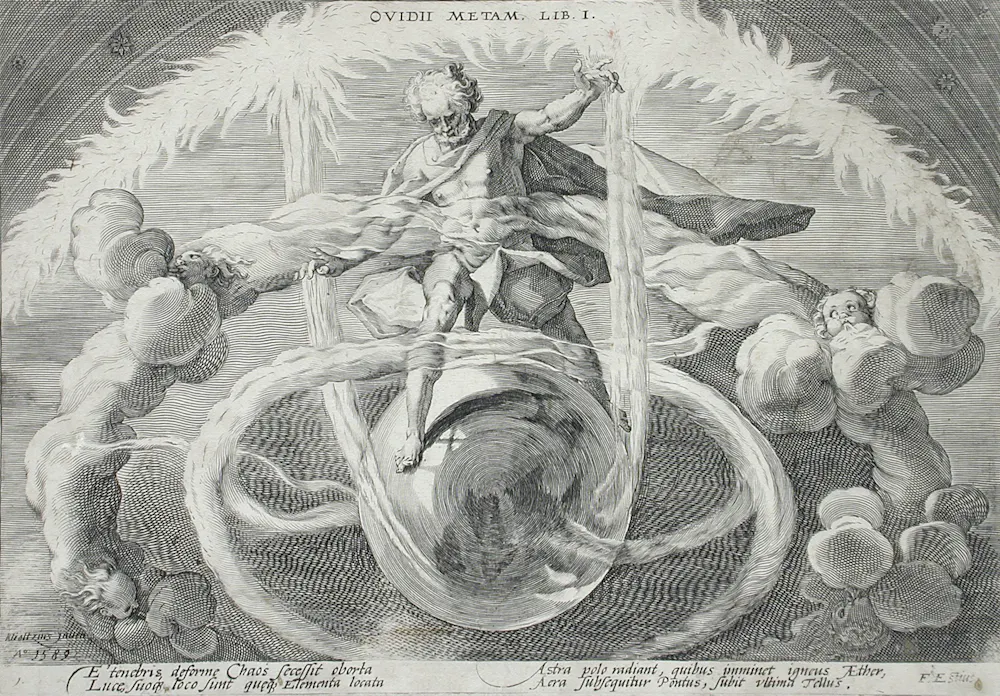 To me, the self-alien-authority triad is representative of the idea that free will is impossible. Not all, but many of the creation stories we have read, Metamorphosis and On the Nature of Things both describe the creation of the world almost as an accident which is the result of the infinite interactions and combinations between atoms, or “motes”. These stories describe the world as starting as chaos, and eventually working its way towards “order” as we know it. With this in mind, it would be complete luck and coincidence that atoms randomly organized themselves in a way that created solar systems and eventually a planet that was capable of inhabiting humans.


Again, here are some photos from my common place book.


Blog Post 3
Blog Post #3
Before I begin talking about my response to the readings themselves, I should provide some preface for this post. The lense that I am viewing the summer readings of this class is now much different than it was during my first two blog posts. I have just recently come back from spending a month in Oxford, England, taking classes at Lady Margaret Hall and getting a feeling for what it is like to live in Oxford. I took 3 classes during my month there: Art and Architecture, Oxford Authors, and Voyages in Afternoon Tea. Coincidentally, all three of these classes were taught by the same teacher, Mr. John Rolfe. As I went through the first few days of classes, it became apparent that there was an obvious connection between the content of my classes at Oxford, and the summer readings for AP Lit. I brought this up with him, and we immediately started talking about the themes of intertextuality, asking better questions, and fashioning ourselves. Instead of purely studying the technical design of the architecture of oxford, we questioned why they designed certain buildings in a particular way, and if they were designed that way to fashion a particular image of Oxford? Similarly, my Oxford Authors class was filled with discussions about intertextuality, adaptation, and appropriation as writings like Alice in Wonderland and Chronicles of Narnia are filled with oxford based intertextualities. In my other blog posts, I divided the post into different sections based off of the different readings, but all of these sections are so connected that I will not be doing that with this post. Anyways, that's enough preface.
Intertextuality is defined as the idea that all texts are somehow connected to a network of existing texts and art forms. Texts and other pieces of art have a “reproductive dimension of appropriation, suggesting the manifested ways in which texts feed off and create other texts” (pg 2). Roland Barthes' idea that “ ‘any text is an intertext’ suggesting that the works of previous and surrounding cultures are always present in literature…” (pg 2) was a concept that I talked about extensively in my classes at Oxford. In my class, Oxford Authors, we read Alice’s Adventures in Wonderland, The Lion, the Witch, and the Wardrobe, and the Hobbit ( by Lewis Carroll, C.S. Lewis, and J.R.R. Tolkien respectively), all books written by authors who taught at Oxford, and traveled around looking for ways in which the current events of Oxford at the time of their writing may be intertwined into their famous texts.
One example of this was when we visited the Oxford Museum of Natural History. This museum was built in the 1850s, a couple of years before Lewis Carroll wrote Wonderland, published in 1865. Carroll was a mathematician and logician, and was fascinated by certain logics that people assume (If a=b and b=c, then a=c). Right at this time in Oxford, the same time as when Carroll was writing Wonderland, Charles Darwin’s ideas on evolution were being published and debated at the OMNH. Darwin had recently said “this planet has gone cycling on according to the fied law of gravity, from so simple a beginning endless forms most beautiful and most wonderful have been, and are being, evolved.” Darwin’s ideas of evolution were undermining the basic assumed logic that nearly everyone used. Carroll, a logician, was obviously intrigued by how our basic logic was being flipped upside down. Throughout Wonderland, many of the characters and scenes used reversed logic, or “nonsense” as Carroll described it.
More directly, Carroll inserted various direct intertextualities throughout Wonderland in the form of satires. At several points, different characters recite poems or hymns, most of which were Carroll’s satires of older, less popular poetry. At one point, Alice recites How Doth the Little Crocodile, which is actually a parody of Against Idleness and Mischief by Isaac Watts (another logician writer). Without going into extraneous detail, Against Idleness and Mischief sends a direct message of a busy bee doing work all day and describes it as good, and talks about how being lazy will send you to hell. Carroll’s satire depicts a lazy crocodile who just sits with its mouth open but says that being lazy is good. Carroll does this several times throughout the book, taking older poems with a clear message and parodying them by conveying the total opposite message.
Another idea that we talked about briefly in my Oxford Authors class was the idea of the “death of the author”, the idea that the author’s original writing is only part of the meaning behind the text, and that the reader will take it and push its meaning even further based off of that person’s individual culture and intertextual references. This idea was also popularized by Roland Barthe, so these ideas are very much intertwined with the AP Lit reading, “also highlighted the ways in which texts were not solely dependent on their authors for the production of their meaning, indicating how they benefited from readers who created their own intertextual networks and connections.
“Novels offer themselves not as challenges to the cannon, but as canonic… as already canonized, one might say they appear to locate themselves within an established literary culture, rather than presenting themselves as an assault on that culture.” (pg 12) This idea of a literary canon was one that I found fascinating, and possibly relevant to the other readings in the packet. Sanders goes on to talk about whether or not intertextual knowledge should be necessary to enjoy a piece of text. “Providing the scaffolding for these approaches is, of course, the role of literature in educational contexts and this introduces the social as well as economic rationales for adaptation, themes, and topics to which we will return” (23). This goes back to the previous discussion from Curious, that in order to make higher level and intertextual connections, you need to have a pre-existing general knowledge of the literary canon. You can’t immediately go from not reading anything to making intertextual connections and understanding subtle intertextual references, you have to go to school and read the canon first.
Sanders then provides several examples of film adaptations of older literary works and says “in all of these examples, it can be argued that the full impact of the film adaptation depends upon an audience’s awareness of an explicit relationship to a source text”. This makes sense. Obviously, if a film is an adaptation of an older text, it will mean something different to someone depending on if they have read the original source text. But does that difference necessarily mean the experience is better or worse? For me, I always prefer reading a text before seeing the film, but it doesn’t seem realistic to expect everyone to always read the book and understand every possible reference before going into a film or theater adaptation. Furthermore, I would argue that the best book to film adaptations should be able to stand alone without knowledge of the original book or source material.
I think a key example for this debate would be an adaptation like Game of Thrones, made from the book series A Song of Ice and Fire written by George R.R. Martin. HBO was able to successfully adapt one of the most complex and inaccessible political-soap-opera-epic-fantasy series into one of the most popular and widespread television series ever. Certainly more people have watched the show than have read the often difficult books, and these show-only people still get plenty of enjoyment out of the series. Is their enjoyment less than someone who has also read the books? I do not know if there is a correct answer. Personally, I watched the series first, and then read the books as soon as I was caught up. Now having read the books, the show’s timeline having passed the books, and George R.R. Martin being so slow to release any new material, each episode is worth so much more to me because it gives me more insight into the universe that I have spent so much time with. I feel a serious investment into the Westeros universe not because of the time I spent watching the show, but because of the time I spent reading the books. Ultimately, I think this is why people tend to become so attached to book characters more so than television characters. Reading is a much more time-consuming and intimate form of absorbing a “text”, so when they see those characters adapted to a big screen (or theater production) it means a lot more to them than someone who has just read a plot summary on the way to the theater.
I have digressed, but I think Sanders agrees with what I am saying; “Knowledge of the adaptational work is not necessary for a satisfying experience of viewing such a film, then, but we might argue that such knowledge brought into play in the process of understanding could enrich the spectator’s experience and may indeed enhance or complicate the pleasures involved.” (28) In other words, it is perfectly fine to watch the movie (or show) without having read the book, but you will probably have a more valuable experience if you have.
Stephen Greenblatt describes selves as “... a sense of personal order, a characteristic mode of address to the world, a structure of bounded desires- and always some elements of deliberate sharing in the formation and expression of identity”. Sanders talks about Crick and Watson’s terms that they use for adaptation “moving away from a purely static or linear approach. Unfoldings, mutations, repetitions, evolutions, variations, the possibilities are endless and exciting” (52). This idea of art adapting to art, constantly adding to the greater canon of art, suggest that the canon can only expand, and not decrease. One of the places in Oxford that I remember most was the Oxford Union Library. The walls and ceilings of this library are covered with murals of different scenes from the story of King Arthur, but they were painted by a group of painters who identified themselves as “Pre-Raphaelites”. They essentially believed that Raphael and other renaissance artists had too great an influence on modern art (as of the 19th century) and wanted to paint in an older style before the renaissance had happened.
My Art and Architecture class focused for a month on different pieces of art and architecture around Oxford which were important in Oxford’s history and culture. We discussed the decision making in why they designed certain buildings in Victorian/Industrial architecture rather than classical, and why certain pieces of art or buildings were significant in the identity of Oxford. We also talked extensively about whether or not the paintings of King Arthur’s journey was a form of Oxford fashioning itself. Arthur and his legends are certainly a massive part of old English tradition, and have had a great influence on English culture. In my opinion, King Arthur seems like “The Guy” when it comes to English tradition, so it makes sense that they would make grand paintings in a grand library to honor him. Oxford wanted to fashion itself in light of its greatest heroes, so by portraying Englishmen in light of King Arthur, they are trying to fashion themselves as being “Arthurian” or as perfect Englishmen.
At around the same time as these Arthurian paintings were being constructed (mid 19th century and peak Victorian era), the Pitt Rivers Museum collection was also being assembled. The Pitt Rivers Museum is an Oxford museum which features pieces of art, artifacts, or weaponry from non-English cultures around the world. From Roman helmets to Native American skins, this museum had about four to five pieces of art to represent every culture. What is fascinating about this, is that we could use this small selection of art to see how the British people were trying to fashion selves for other cultures. It wasn’t a coincidence that the German artifacts were finely constructed rifles and helmets where as the South American and African tribes were represented with shrunken heads, damaged skulls, and spears. The collectors for the Pitt Rivers museum had inadvertently (giving them the benefit of the doubt) fashioned the native cultures, of which England was most likely colonizing at the time, to look much more primitive, alien, and lesser-than the British. The culture of South America was represented with a shrunken head, whereas British culture was the valiant King Arthur and wise Merlin! A great quote from the Renaissance Self-Fashioning piece articulates this perfectly, “Self-Fashioning is achieved in relation to something perceived as alien, strange, or hostile. This threatening other - heretic, savage, witch, adulteress, traitor, antichrist - must be discussed or invented in order to be attacked or destroyed.” (pg 9) It makes sense that the designers of the Pitt Rivers museum, started during peak Victorian Empire age, would make native tribal cultures look primitive and less-than in order to justify their colonization of their lands.
I’d like to finish this blog post by briefly responding to a quote from Bird by Bird by Anne Lamott; “I devoured books like a person taking vitamins, afraid that otherwise I would remain this gelatinous narcissist, with no possibility of ever becoming thoughtful, of ever being taken seriously.” . This sarcastic side comment seemed like a personal attack at me. The more I travel to different countries, meet new people, and even tour colleges, the less I feel like I know. I feel especially unworldly and even “uncultured” as I drive back into my suburban neighborhood surrounded by a nearly homogenous population. I don’t know what the proper solution to this feeling is. I obviously won’t become the cultured-pseudo-renaissance-man that I strive to be just by reading books. Would that be accomplished by traveling? By having “real” experiences? Again, I’m not sure if any of those would be gratifying, but if traveling and having “real” experiences isn’t gratifying enough then I don’t know what would be. To get even more self-aware, are these thoughts elitist or narcissistic in their own light? Is the desire for more knowledge an inherently narcissistic one? I don’t know.
After that digression, I will end with photos from my Commonplace book.


Blog Post 4
I don’t really know how to start this gracefully, so I guess I’ll just try and answer the question. After having read Greenblatt and Scott, the one thing that was apparent in my mind was how much our general perceptions of “things” are formed by our surrounding culture (and pretty much every other element of our surroundings like family, religion, geography, or anything else that I am just going to funnel into the word culture). The prompt asks who has “agency” in creation; according to Dummies.com agency, or an agent (at least in this context), means someone who has permission or the ability to do something. When it comes to the act of creating something, it seems that a single person may appear to have agency, but if they existed in a vacuum they probably wouldn’t be able to create anything. Now that I’ve said that, I realized that I don’t really know exactly what is meant by “creation”. The idea of creation in general is pretty broad; creating something could refer to art, literature, or music, but it could also refer to a person or possibly your own (or someone else’s) identity, as is discussed in Greenblatt’s writings.
I will just start with the most literal possible interpretation of a person creating art. With all of the freedoms that a liberal democracy has, any person has the freedom to create art or express themselves. In this sense, I think that art still isn’t solely created by the one person, but by the culmination of that person’s experiences and surrounding culture. Many artists take inspiration from negative experiences in their past, so that isn’t necessarily the artist themself creating the idea but the experience.
For example, one of my favorite rappers, Denzel Curry, recently went on a podcast and talked about how he was molested as a child. He said that the experience, however horrible it was, has been a major driving force for his creativity and musical output as well as pushing him to be a better person. Denzel is an awesome person who is definitely making amazing music himself, but part of his creativity has definitely been “turn on” by that horrible childhood experience. Furthermore, experiences like molestation or abuse are sometimes caused by alcoholism or substance abuse which are products of American culture. This is only one of the experiences that may have inspired or affected who Denzel Curry is today, and I’m guessing that each one could be traced to another external factor, not just Denzel himself. I think I’m rambling now. I guess what I’m trying to say here is that the creation of art comes from your inner emotions and personality which are shaped by experiences and surrounding cultures which for the most part you cannot control. So even though the artist themselves are doing the creating, its not necessarily the artist which is equipping themselves with their creative drive, but all of the other life experiences and exposure to culture which was forced onto them. So the artist doesn’t have the individual agency to create something, culture and experiences have the agency to form or fashion people who then make art.
One idea that just popped into my mind was the whole phenomenon of art during the Renaissance movement. Although artists were still being creative and generally had freewill to make whatever art they wanted, they were commissioned to make paintings by rich aristocrats or church leaders and made art for specific clients. In this situation, the artists themselves didn’t really have agency for creation, but the patrons or rich people did. Michelangelo did not have the freedom to paint anything he wanted on the ceiling of the Sistine Chapel, he was specifically paid to make biblical art. I feel like this probably relates to Greenblatt’s idea of the authority fashioning the person. In this situation, the authority, the church or rich people, were literally fashioning the culture of the time by paying artists to make art for them. Furthermore, its possible that the authority themselves have been fashioned by some greater power. I highly doubt that the rich patron clients of renaissance artists were really that creative or had interesting ideas for their artists to make, its more likely that they had been inspired by the culture of the Renaissance to want certain types of paintings, usually related to religion, made for their houses or churches. So in this scenario, the cumulative Renaissance culture gave agency to the rich patrons so that they could give agency to actual artists to make art of their own. The art was not only created by the artist, but with heavy influence from multiple other sources.
This relates to the ideas present in Adaptation and Appropriation, which talks in detail about how art doesn’t exist by itself, but is more present within a massive web of connected art, ideas, and trends within human culture. With these ideas in mind, I think the answer to the grand question, “who has agency for creation”, I would say that it is the collective culture web of interconnecting ideas and ways of thought. This appeared to be especially true to me after reading the “creations” packet. It seemed obvious to me that the creation story in Genesis took massive influence from older creation stories like Metamorphosis, Works and Days, or On the Nature of Things, all of which have similarities of the world being divided into light and dark, sea and sky, and the creation of a perfect innocent man before some form of corruption or loss of innocence occurs. The creation of these stories wasn’t made by one god (or kinder nature), and it especially wasn’t made by just one author. These creations were created by a long history of creation myths being passed down in western culture, probably several hundred years in the making.
This concept still makes sense on the literal level. An artist (or critic) doesn't simply make something in a vacuum, whether or not they are aware of it, their creations are the sums of a lifetime's worth of experiences and influences. I can't find the quote exactly, but I remember reading Trey Anastasio, the guitarist from Phish, talk about how his influences are totally unique to him. He said that even though he is a huge fan of Jimmy Page, he didn't grow up in the 50s listening to only Doo-Wop, Delta Blues, or Soul music. Even if Page has seriously influenced him, he will never be exactly like him because he grew up in suburban New England in the 80s listening to hair metal and shopping mall music, not England during the 50s.
The culmination of interconnected human culture and thought gave agency to these creations, and they likely give agency to all forms of creation.

Blog Post 5
To me, the self-alien-authority triad is representative of the idea that free will is impossible. Not all, but many of the creation stories we have read, Metamorphosis and On the Nature of Things both describe the creation of the world almost as an accident which is the result of the infinite interactions and combinations between atoms, or “motes”. These stories describe the world as starting as chaos, and eventually working its way towards “order” as we know it. With this in mind, it would be complete luck and coincidence that atoms randomly organized themselves in a way that created solar systems and eventually a planet that was capable of inhabiting humans.
Furthermore, with the concept of evolution in mind, a random bonding between sea proteins resulted in the formation of life. Slowly, these basic life forms “accidentally” mutated into larger and more complex multicellular organisms. The basis for evolution (to my knowledge) actually seems similar to the concepts behind progress in Metamorphosis and On the Nature of Things. Both the creation stories and Darwin express that random interactions between motes, or mutations in animals, eventually result in progress. By complete happenstance, sea lifeform mutated to living on land, and even more randomly, a meteor impact killed all dinosaurs and allowed for primates to become the dominant animal group on earth. Some primates developed larger prefrontal cortexes than others, and they eventually evolved into day Homo Sapiens Sapiens. So far, all of the progress to the creation of mankind has been accomplished via evolutionary luck. I think that the scientific explanation of evolution does not necessarily make the stories of Metamorphosis or On the Nature of Things false.
Next, the progression of human culture has been defined largely by which civilizations had the best armies. Rome wasn’t initially influential because of their cultural advances, they had the most dominant military and integrated and spread Greek culture across Europe and the Middle East. European dominance was also likely due to abundance of rivers and higher population density which lead to increased competition and a more advanced civilization. Western culture isn’t more dominant in America and Canada because the natives liked it better than what they already had, Europeans simply had better military technology than the natives.
The point I am trying to make is that it's really coincidental that the world is currently the way it is. The world isn’t how it is today because people decided to make it this way, infinite human interactions eventually culminated in what is modern humanity. With this in mind, you were born with countless variables pre-determined which likely cancel out any possibilities of there being total free will. No matter how hard I try, I will never be born as a Chinese girl during the Qing dynasty, nor will I ever grow up in similar conditions, nor could I ever live in similar conditions. Furthermore, I was raised with basic western values and the values that almost all humans believe in. I think murder is bad, not because its biologically built into my brain, but because my whole life, everything I have ever seen about the topic of murder has shown me that murder is bad. Even if I wanted to kill someone, I would be very unlikely to ever go through with it because of how my brain has been programmed to not kill people (and because I was born into a society which punishes people who kill other people).
To connect this with the self-authority-alien triad, it has been established (through our class discussions) that the self is fashioned by the authority. I believe that this fashioning does not occur by any single authority, but that the authority is every other human (and possibly life form) ever born. Every interaction, purposeful or not, has contributed to the greater human culture. Whether it was passing by someone on the street for a second, or getting married, each interaction contributes to societal and cultural norms which have constantly influenced us from the second we were born. It is impossible to escape this influence; our society is constantly imposing its norms onto us in order to ensure that we do not stray and become the unwanted “alien”. Well, I now sound like a conspiracy hippie trying to warn you against the establishment. I think that means I’ve done my job properly.

Initial outline and pre-post here> THIS IS THE LINK TO MY PRE-BLOG THOUGHTS FROM COMMONPLACE (I know it was supposed to be photos from the common place book but I accidentally did my outline here before reading the instructions again)
As I was looking through my Commonplace book, a couple of different things stood out to me. First was that it was really weird for me to return all the way back to the thinking that I was doing a couple months ago. I was in such a different place when our first commonplacing started. I started right after Junior year ended, and followed my thinking about those early texts throughout my summer at home and in England. I don’t know if this is really that important in regards to my ideas and making long term connections, but it was interesting to go down “memory lane” even if it was only a couple months ago. In a way I think it's comforting to look back because I can definitely see how little I really understood about the texts and about commonplacing in general. I don’t claim to know that much now, but I have definitely progressed significantly since then and I guess it just feels nice to look at everything as we get into the 3rd quarter of the year.
As I started reading over my notes on Better Living Through Criticism, it immediately stood out to me that there would be some form of connection about art, creation, and how we view creations which connects to Frankenstein in some way. A quote that stood out to me was “Art is whatever the artist says it is”. All of our recent readings have all discussed important artists, but they haven’t been creating art in the traditional sense. Their art has been the universe, Earth, and life. This brings up the question of whether or not life counts as art. Personally, I think the answer is obviously yes, especially in the context of these creation stories. These texts depict the gods (and the big G God) as meticulously crafting the universe in a step by step process. If metallurgy, leatherwork, or any other learned craft can be considered art, then the creation of the universe and all life must certainly also be art! One of the main points from Better Living Through Criticism is to live life with a critical and perceptive eye, as if one was always going through a museum looking at art. This would make perfect sense and aligns with the idea that the universe is a meticulously crafted piece of art made by God. The concept of appreciating everything around us, especially the tiny subtleties that usually go unnoticed, is a great way to appreciate the infinite potential for beauty in the universe.
As was discussed in Renaissance Self-Fashioning, everybody takes part in their own individual acts of creation in the form of crafting their own identities and selves. This is a less conscious effort than how God created men, or how Frankenstein intentionally created life, but it is still the formation of an identity that is specifically crafted for an individual’s own scenario.
As I just mentioned, Dr. Frankenstein also creates art. There are several connected implications of Frankenstein’s story. The first implication that appears to me is that God hates Mankind. There is a surprisingly relevant quote from Spy Kids 2: The Island of Lost Dreams; “ Do you think God stays in Heaven, because he too, lives in fear of what he’s created here on Earth?”. Frankenstein is appalled by his creation and even wants to kill it; was Mary Shelley trying to imply that God may feel this way about humans? Another possible idea is that Frankenstein is facing the consequences for believing that he could create life like God does. Frankenstein had too great of an ego for believing he was equivalent to God, and was punished by feeling immense disgust, shame, and fear for his creation. Similar to Adam and Eve who’s ego and temptation pulled them to eat from the Tree designated specifically for God and not humans. Adam’s actions implied that he felt that he was equivalent to God, but Adam was punished severely for that action. Frankenstein succumbed to his temptation to create life, a job that was typically kept for God alone. By letting his ego and temptation get the better of him, he was forced to face the consequences of his creation.
Furthermore, the Walter Benjamin quote, “There is no document of civilization that is not at the same time a document of barbarism” stood out to me in the context of Frankenstein. Frankenstein’s monster appears to represent total barbarism; it is this ugly, mangled, and deformed creature whose tragic and painful existence is seen as a punishment for something he never did. If Benjamin’s quote is true, then the monster, the ultimate representation of brute barbarism, must also serve as the ultimate representation of civilization. Perhaps this implies that human civilization is just a mask to cover the actual ugliness that is merely disguised by our civilization, clothing, and societal norms which make us “better” than a brute animal.
I don’t really know how to tie up or conclude these ideas, but that's because we still are far from finishing our discussions with them. I will finish with some questions that I still don’t know the full answer to, or want to continue thinking about throughout the rest of the year. What is the connection and meaning behind the myths surrounding Prometheus, and Frankenstein? What are the implications of Frankenstein’s creation to the rest of humanity and God’s creations, and how does Frankenstein’s creation of his monster connect to the creation stories? What is the importance or significance behind these creation stories if they don’t literally explain the truth behind how the world was created? What was Milton’s purpose for writing Paradise Lost?


No comments:
Post a Comment